
GALLERY
PROJECT SUMMARY
Los Angeles Trade-Tech College needed to elevate its E-Sports Lab with a reliable, high-bandwidth network infrastructure capable of supporting instructional use. GST responded by delivering a turnkey infrastructure upgrade engineering new CAT6 pathways, extending a multimode fiber backbone, deploying enterprise-grade switching, and integrating secure power systems.
Key Tasks Included:
- Installed 36 new CAT6 network runs with engineered surface-mount routing, professional termination, full labeling, and certification testing.
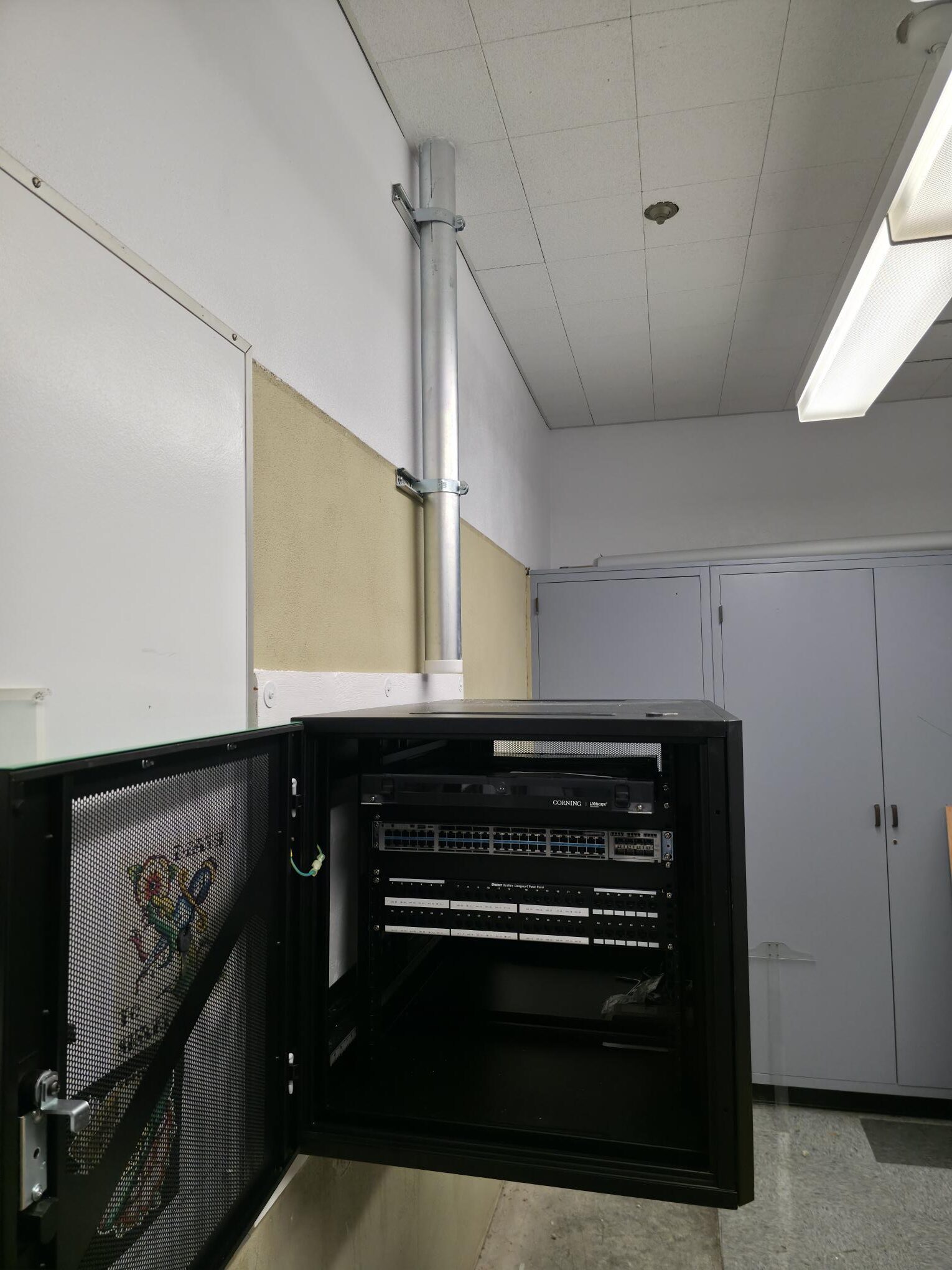
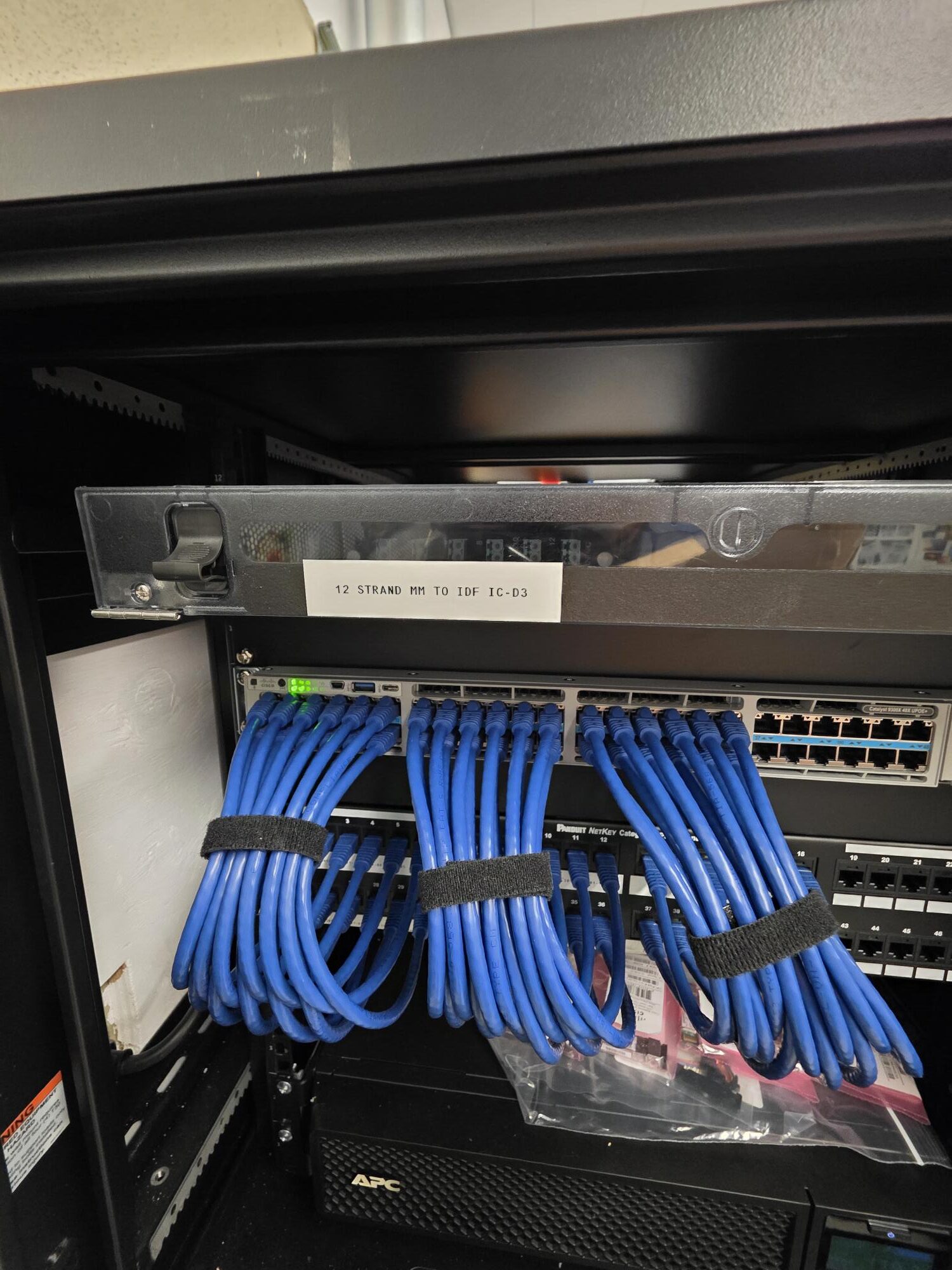
- Extended a new multimode fiber backbone to the IDF, including structured wall opening, precision terminations, and rack-mounted fiber management.
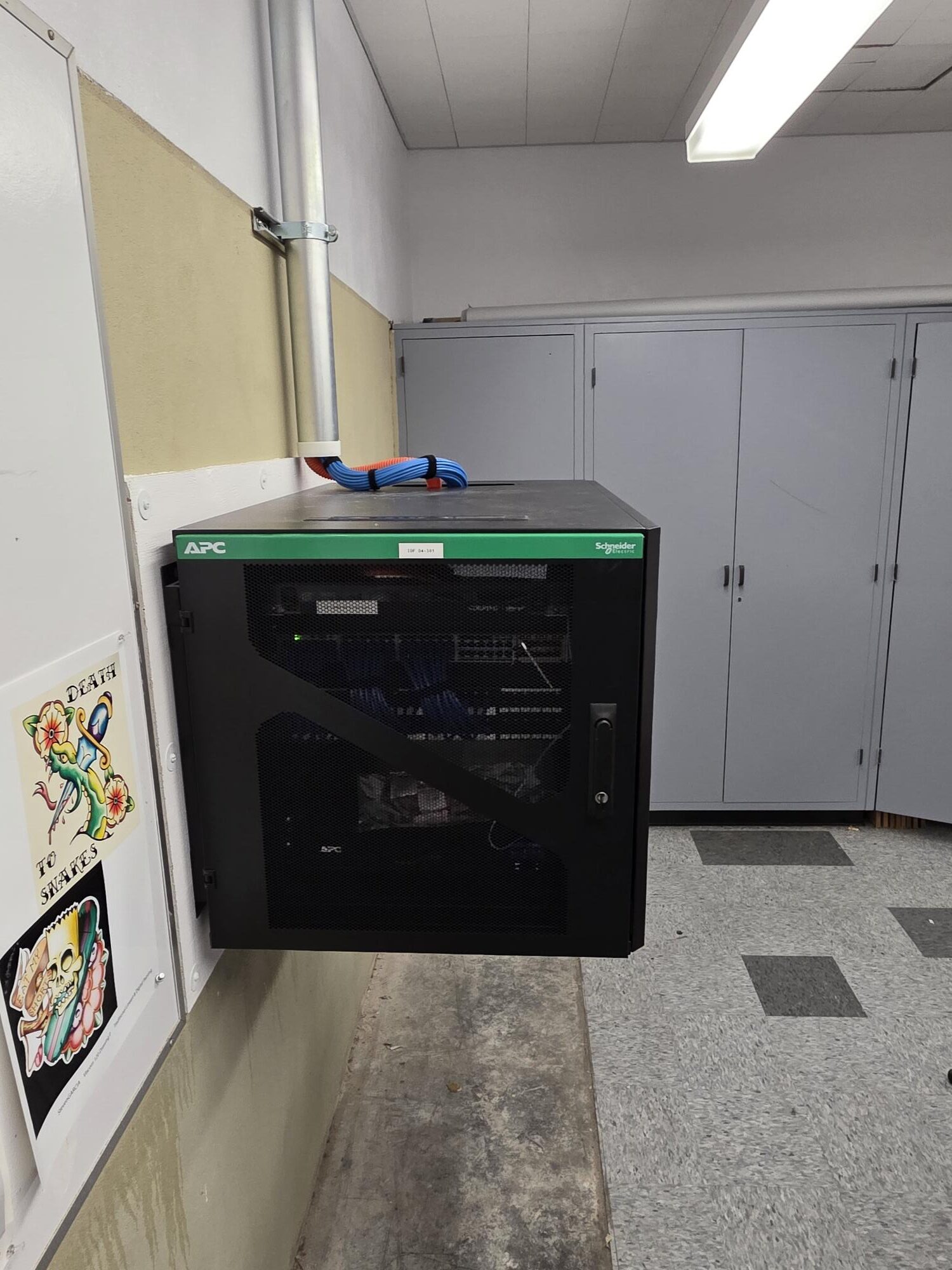
- Integrated a wall-mounted equipment enclosure and high-capacity UPS system to provide clean, resilient, and properly structured power for the lab’s network environment.
- Deployed an enterprise-grade network switch with high-bandwidth uplinks, optical transceivers, and complete port, VLAN, and documentation mapping.
The completion of this project marks a significant step forward for LATTC’s E-Sports Lab, transforming its network environment into a dependable, high-capacity platform that can sustain growing digital demands. GST’s approach to cabling, fiber integration, and enterprise networking ensured a solution that is not only robust today but adaptable for the future. The result is an infrastructure that enhances academic experiences, supports operational continuity, and reflects GST’s commitment to delivering quality, compliant, and future-ready technology solutions.
QUICK FACTS
ORGANIZATION DETAILS:
80 career-technical programs, 18,000-22,000 students, 500-600 faculty members
INDUSTRY:
Higher Education
VENDORS INVOLVED:
Panduit, PanNet, Corning, APC, Cisco, Chief
CHALLENGE
Los Angeles Trade-Tech College needed a network foundation capable of supporting an increasingly digital instructional environment. The existing E-Sports Lab infrastructure lacked the structured cabling, fiber capacity, and organized switching layout required for reliable performance and future scalability. LATTC needed a clean, serviceable, and high-bandwidth backbone that could keep pace with growing device counts, modern lab workflows, and higher network demands.